
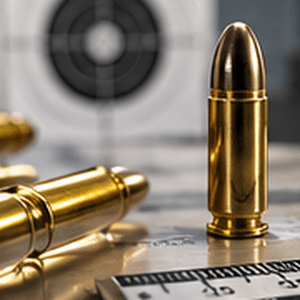
Firearms identification connects fired ammunition components to specific weapons through reproducible microscopic imperfections transferred during ignition, chambering, rifling contact, and ejection.
1. Trajectory Reconstruction at the Scene
Determining bullet paths through vehicles, architectural walls, and glass partitions requires calibrated stainless-steel trajectory rods, universal angle finders, and co-aligned Class IIIa laser emitters. Laser trajectory photography using high-speed exposure and aerosol foggers establishes line-of-sight origins and shooter positions with sub-degree angular certainty.
2. Striation Matching & Class Characteristics
Fired projectiles carry land and groove impressions reflecting barrel rifling pitch, twist direction (clockwise or counter-clockwise), and number of grooves. Striation comparisons require high-precision comparison stereomicroscopes with synchronized side-by-side illumination, ensuring microscopic tooling marks can be superimposed across matching lands.